
The Catalyst
The macro landscape shifted decisively on February 12, 2026, following the release of January’s Consumer Price Index (CPI). The 2.4% annual print came in below the 2.6% consensus, signaling that the Federal Reserve's restrictive policy has successfully anchored inflation. This data triggered an immediate collapse in the 10-Year Treasury yield, which fell from 4.10% to 3.78% in 48 hours.
- Event: Disinflationary CPI print and Dow Jones 50,000 breach (February 13, 2026).
- Reaction: Russell 2000 (IWM) outperformed the S&P 500 by 240 basis points over the last three trading sessions.
Critical Data
Institutional flow data indicates a massive liquidation of "Magnificent 7" hedges in favor of small-cap beta. Small-caps, which carry higher debt-servicing costs, are the primary beneficiaries of the projected 75bps of rate cuts now priced in for 2026.
| Metric | Current Status | Implication |
|---|---|---|
| IWM Trading Volume | 114M (Feb 13) | Bullish (42% above 30-day avg) |
| 10-Year Yield | 3.78% | Bullish (Lower cost of capital) |
| IWM/SPY Ratio | 0.48 | Bullish (Mean reversion beginning) |
Execution Plan
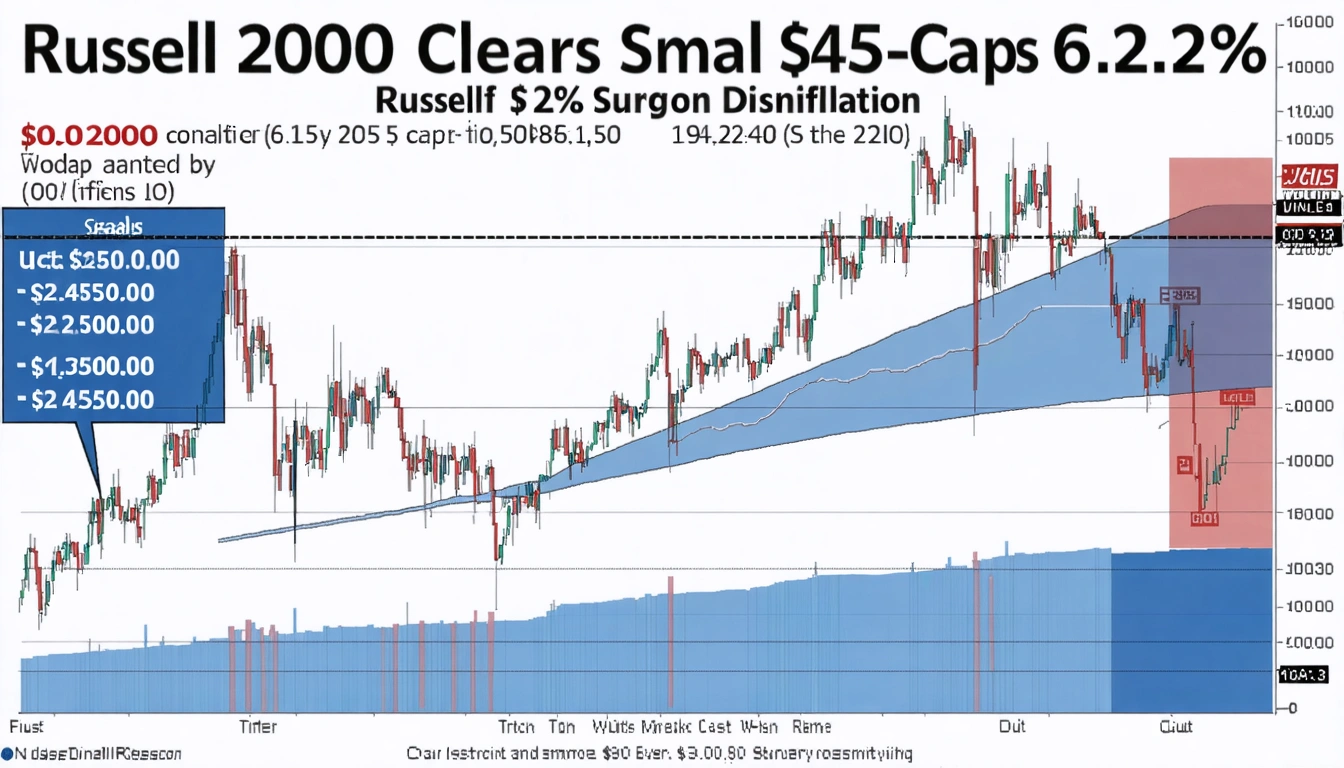
The structural breakout above $245 converts a 24-month resistance zone into a primary support floor. We expect a "catch-up" trade as fund managers rebalance portfolios away from overextended mega-cap tech. The immediate upside target is the $268-$272 range, representing the 1.618 Fibonacci extension of the recent consolidation base.
Watchlist: IWM, TNA (3x Leveraged), KRE (Regional Banks).
To validate these levels with custom indicators, check the Chart Analyzer or set automated monitors via TradingWizard.ai Bots.
FAQ
Is the Russell 2000 breakout sustainable without tech participation?
Yes. Historical "Great Rotations" often see small-caps lead while mega-caps consolidate. The broadening of market breadth is a hallmark of a healthy bull market, not a divergence to fear.
What is the primary risk to the small-cap long thesis?
A "hot" PPI print or a reversal in the 10-Year yield above 4.25% would invalidate the current valuation expansion. Small-caps remain highly sensitive to the cost of debt.