

Market Context
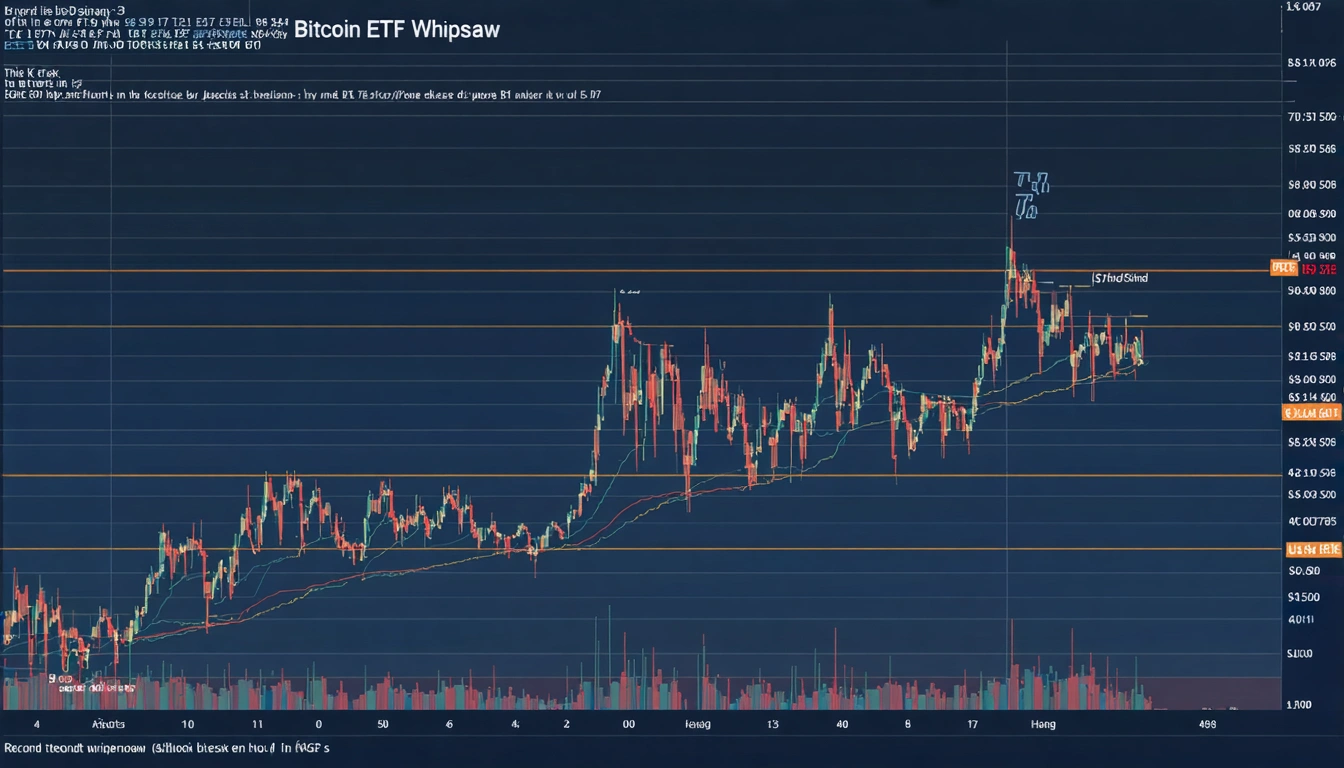
Bitcoin’s ETF story just flipped from “one-way institutional bid” to “two-way, nervous tape.” November 2025 is the first real stress test for spot Bitcoin ETF holders.
On November 18, 2025, BlackRock’s iShares Bitcoin Trust (IBIT) logged a record single-day outflow of roughly $523 million, its largest since launch in January 2024, as Bitcoin slid toward multi-month lows. Both CoinDesk and Yahoo Finance flagged this as a turning point in institutional sentiment.
By November 19, total US spot Bitcoin ETF outflows for the month were nearing $3 billion, with IBIT responsible for the bulk of the bleed, according to Cointelegraph. Yet, only a day later, flows flickered back to positive: on November 19, ETFs posted a modest ~$75 million net inflow, led again by IBIT, as reported by Yahoo Finance.
The real shift came on November 21. After weeks of redemptions, US Bitcoin ETFs booked about $238 million in net inflows and record ~$11.5 billion in trading volume, with BTC reclaiming the $84,000 area, per TradingNEWS. That does not erase the November damage, but it shows buyers are still there on dips.
- Record IBIT outflow: about $523M on November 18, 2025, largest since January 2024 launch.
- Month-to-date November ETF outflows: approaching $3B by November 19, 2025, second-worst month on record.
- First strong rebound: November 21 saw ~$238M inflows and ~$11.5B ETF volume, suggesting two-way institutional positioning rather than a full exit.
Data Highlights
The key tell is not just price — it’s how ETFs, futures, and spot react together. November shows stress, but not a full structural unwind.
According to Superex and CoinDesk, cumulative November outflows from IBIT alone have topped $2 billion, while total US spot Bitcoin ETF redemptions are close to $3 billion. Yet the average ETF buyer’s cost basis sits near $90,000 per BTC-equivalent. With BTC oscillating around that level mid-month, many large holders are roughly flat, not yet forced sellers.
Flows then whipsawed: Yahoo Finance reported ~$75 million in net inflows on November 19, led by about $60 million into IBIT, and TradingNEWS highlighted $238 million in inflows on November 21, with BTC bouncing back above $84,000.
<table>
  <thead>
    <tr><th>Metric</th><th>Value / Change (Nov 2025)</th></tr>
  </thead>
  <tbody>
    <tr>
      <td>IBIT record 1-day outflow (Nov 18)</td>
      <td>≈$523M redeemed</td>
    </tr>
    <tr>
      <td>Total US spot BTC ETF outflows in November (by Nov 19)</td>
      <td>≈$3B, worst or near-worst month on record</td>
    </tr>
    <tr>
      <td>Average US BTC ETF buyer cost basis</td>
      <td>≈$90,000 per BTC-equivalent</td>
    </tr>
    <tr>
      <td>Net ETF inflows (Nov 21)</td>
      <td>≈$238M inflow, ~$11.5B volume, BTC back above $84K</td>
    </tr>
  </tbody>
</table>

<p>The takeaway: big money is not abandoning Bitcoin; it is rotating and de-risking at the margin. November’s flows look more like a positioning reset after an overheated run than a secular top — but that can still mean deep drawdowns and violent squeezes.</p>
Trade Takeaways
This is how I’d think about it as a trader in late November 2025.
<h3>1. Treat $90K as the ETF “pain line”</h3>
<p>With the average ETF cost basis around $90,000, that zone is now a structural pivot. Above it, late ETF buyers are green and more willing to hold. Below it, they slip back into loss and become potential supply.</p>
<p><strong>Bias:</strong> Below $90K and under a declining daily VWAP, favor short or flat bias on lower timeframes. Sustained closes back above $90K with improving ETF inflow data argue for re‑adding directional long risk.</p>

<h3>2. Watch flows, not headlines</h3>
<p>Flows drove this move. Headlines followed.</p>
<ul>
  <li>Cluster of large outflows (multi-day, >$300M per session across funds) often precedes or confirms trend breaks.</li>
  <li>When that pattern flips to net inflows on down or sideways days, it usually signals strong hands absorbing weak ones.</li>
</ul>
<p>Practical rule: before each session, check whether the last 3–5 days’ ETF flows are net positive or negative and size your intraday bias in that direction until price and volume say otherwise.</p>

<h3>3. Intraday triggers to respect</h3>
<p>For short-term BTC-USD traders:</p>
<ul>
  <li>Use the prior US cash session high/low and daily VWAP as your core intraday structure.</li>
  <li>On heavy outflow days, fades near VWAP with tight stops above the last swing high often pay better than breakout chases.</li>
  <li>On confirmed inflow days (flow data + tape), look for failed breakdowns below Asia/Europe lows that reclaim VWAP with rising cumulative volume.</li>
</ul>
<p>Risk-wise, think in ATR terms. If BTC’s daily ATR is, for example, $4,000, try to keep hard stops within 0.5–0.75 ATR from entry and avoid targeting more than 1.5–2 ATR unless you see clear follow-through and supportive flows.</p>

<h3>4. Macro still matters, but ETF microstructure is now the driver</h3>
<p>Fed rate-cut expectations into December 2025 help explain why dips keep finding buyers. But what actually moves the tape intraday is ETF demand and derivatives positioning.</p>
<p>In other words: macro sets the backdrop; ETF flows now dictate the path. Ignore that, and you’re trading yesterday’s market.</p>

<p>And if you want to act fast: use <a href="https://tradingwizard.ai/app/analyze">Chart Analyzer</a>, scan opportunities in <a href="https://tradingwizard.ai/app">the app</a>, automate alerts via <a href="https://tradingwizard.ai/app/bots">Algo AI Trading Bots</a>. Check <a href="https://tradingwizard.ai/pricing">pricing</a> or learn more at our <a href="https://tradingwizard.ai/academy">academy</a>.</p>
FAQ
How important is the November 18 IBIT outflow for timing trades?
It marked the first real “capitulation-like” print in ETF land — about $523M out of IBIT in one session, as reported by CoinDesk and Yahoo Finance. I’d treat that day’s high/low as reference levels. If BTC trades back above that day’s high with net ETF inflows, it suggests the stress event was absorbed.
How should I size BTC positions around these volatile ETF flows?
Cut gross exposure when ETF flows are sharply negative and BTC trades below $90K and daily VWAP. Use smaller position sizes (for example 25–50% of your usual size) until flows stabilize for at least 3–5 sessions. Only scale back up when you see consistent inflows and price holding above key reference levels.
How can I integrate ETF flow signals into my daily workflow?
Use Chart Analyzer for instant structure (levels, trends, volatility), then set conditional alerts with Algo AI Trading Bots around BTC and crypto proxies. Combine your external ETF flow dashboard with TradingWizard.ai price/volume triggers so you react to regime shifts, not headlines.
Sources
- CoinDesk – BlackRock’s Bitcoin ETF IBIT Posts Record One-Day Outflow
- Yahoo Finance – BlackRock Bitcoin ETF Sees Record $523 Million Outflow
- Cointelegraph – Bitcoin ETFs Near $3B November Outflows
- Yahoo Finance – Bitcoin ETF Flows Turn Positive
- TradingNEWS – Bitcoin ETF Inflows Return With $238M Boost
- Superex – BlackRock Bitcoin ETF Posts Record $523M Outflow
Ready to act? Head to TradingWizard.ai, analyse a chart in seconds and turn signals into structured plans.